
 There is nothing wrong with communicating by email or searching the internet, but the seductive view that it represents is that the virtual is the same as presence, and that we live with the world at our fingertips. As a mostly “brick and mortar” business, Harlequin’s Gardens would like to invite you to come out and see our actual plants and products and talk with us and ask questions and make a personal connection that can develop over time.
Mikl’s Articles
Plant Trees – Save the World

Silver Maple Shade
This week all trees except fruit trees are 30% Off!
There is no doubt that trees help cool the Earth, and they also cool your yard and your city. Even if you don’t have room for a big shade tree, smaller ornamental and fruit trees keep the sun’s rays from striking the soil and warming it. Plants are a good energy investment, because they grow on their own and synthesize food from sunlight. Trees are even a better investment, because of their large photosynthetic capacities and because their value is multiplied over many years. Trees often out-live us, continuing their benefits for our children and the following generations.[Read More]
While it’s Hot, Let’s Plant Cool

chokecherry
Trees are Cool and Harlequin’s Gardens is starting a two week 30% OFF Tree Sale to help with the Cooling. Trees, both the 30’-60’ big shade trees and the 15’-30’ trees are powerful allies for humans both for our survival and for our quality of life. Trees on the west side of the house shade our windows and house from the scorching late afternoon sun, which not only makes our life more pleasant, but also reduces our need for costly air conditioning.
Some Like it Hot!

Marconi Rosso
Peppers have really thrived in this summer’s high heat. I’ve had my best yields ever of Marconi Rosso, Lanterna Piccante, Alma Paprika and Habanada peppers., and they continue to produce more fruits.
Marconi Rosso, like other Italian ‘frying’ peppers make an easy and incredibly delicious side-dish for a Mediterranean-style dinner: simply remove seeds, cut into strips vertically, sprinkle with sea salt and saute in good olive oil over medium heat, turning occasionally until softened (about 7 minutes). Serve as-is, or garnish with toasted pine-nuts or shredded Pecorino cheese.

Lanterna picante
Lanterna Piccante is a unique pepper that you won’t find in stores or even at farmers Markets. The large plants are graceful and bear large numbers of stunning pendant scarlet fruits, 1.5” to 2.5” across, shaped like succulent nodding bells. These are thin-walled, with the flesh having a delicious fruity flavor, and the seeds and ribs packing significant heat. The heat dissipates very quickly and doesn’t linger long on the tongue. To avoid the heat, cut the peppers in half vertically and cut out the seed cluster and ribs. Save a few seeds to add a little spark back to dishes that contain the flesh. I love to chop Lanterna Piccante peppers into 1/4” ‘confetti’ and add to omelettes, stir-fries, chicken or tuna salad, for its flavor and beauty. With the seeds, or some of them, it makes a great salsa ingredient. Like other peppers, they freeze well.

Alma paprika
I love growing Alma Paprika for the fun of watching the fruits change color as they mature, starting out creamy white, becoming marbled and flushed with rosy shades, and finally ripening to vibrant solid red. The distinctive flavor is a little spicy but not hot, perfect for making your own sweet paprika seasoning. I but the fruits into ½” squares and slowly dry them in my dehydrator. I grind the pieces in an electric coffee grinder (that is only used for spices), and store in a glass jar.
This is the first time I’ve grown Habanada pepper, a newer hybrid that is supposed to have all the flavor of a classic Habanero pepper bit completely without heat. One fruit on my plant is approaching ripeness now, and I’m looking forward to trying it.
Preventing Tick-borne Diseases

A warming climate has led to larger populations of ticks and rodents, and southern ticks have expanded northward. The most prevalent tick-borne disease is Lyme Disease (Lyme borreliosis). But Lyme disease cases originating in Colorado are extremely rare, as the black-legged tick that carries the disease is not established in Colorado. The main dangers from ticks here are that they may be carrying Colorado Tick Fever and Tick-borne Relapsing Fever. Cases of Rocky Mountain Spotted Fever are rare in Colorado, but not unheard-of.
Tick season typically begins in April and peaks in spring and early summer. Most ticks on humans are found crawling between the ankle and knee. Apply a natural repellent like ‘Repel’ (a lemon-eucalyptus formula) or ‘No-Bite-Me’ (a multi-herbal cream) to exposed skin and the most vulnerable areas. Wearing tall socks can prevent tick penetration. Tucking pant-legs into
the tops of your socks also helps keep ticks out. Ticks are usually dark, and show up best on light-colored clothing. Ticks can drop down from trees as you pass under them, so wear a hat and long sleeves as well as long pants. Dogs frequently return from walks and hikes with ticks and require thorough inspections before re-entering the house, or your car. Eve, who doesn’t have a dog, once found a tick on her pants-leg while working in her vegetable garden. Garlic-based ‘Mosquito Barrier’ is said to reduce tick populations in the landscape by 50%.
As soon as you get home after a walk or hike in grassy or forested areas, run your clothing in the dryer on the high-heat setting and take a shower, checking for ticks – especially in arm-pits, groin, back, neck and scalp. If you find a tick that has already attached itself, remove it as soon as possible. To remove a tick, use one of our handy ‘Tick Keys’, or use tweezers to gently and slowly pull straight up on the tick. Do not squeeze the tick body in the tweezer or crush the head. If using your fingers, cover them first with a tissue. Do not use alcohol, a hot needle, or gasoline to attempt removal. Save the dislodged tick in a small, closed jar in case you develop symptoms and need to identify the infection.
(Photo courtesy Erik Karits on Unsplash)
Top Fragrant Roses In Stock

Zepherine Droulin
Yes, I know. Here we are, talking about roses and about how to control the Japanese beetles that love them, in the same newsletter. Well, fragrant heirloom roses are worth it! And we currently have stock of some of the most sought-after varieties. Cases in point include Zephirine Drouhin, an heirloom climbing Bourbon rose with completely thornless canes and elegantly scrolled, very fragrant medium pink blossoms that repeat-bloom. Zephirine is perfect for growing on an arched entry trellis, especially where she gets afternoon shade, topping out at 6 to 7 feet tall.
Then there’s heirloom Rose de Rescht, purportedly from Ispahan, Iran, and known as one of the very most fragrant roses

Rose de Rescht
ever. The bush blooms first on old wood, then again on new canes. The 2-3” flowers are packed with deep magenta-purple petals and unforgettable fragrance. She grows in a compact shrubby form, without any floppy, arching branches, to anywhere from 3 to 5 feet tall and wide.
Of course we stock many great roses, many of which are fragrant, all grown on their own roots.
Blue Blazes is here! Pollinators & Gardeners Rejoice!
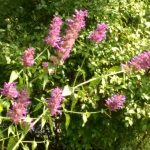
Blue blazes
One of our favorite hardy Hummingbird Mint varieties, ‘Blue Blazes’, is ready now in 1-gallon pots, perfect for summer planting. For many years, the gorgeous specimen in Eve’s water-wise front yard elicited admiration, comments and questions from passing pedestrians, cyclists and motorists. Many asked ”What is that shrub with the glowing purple-magenta flower spikes?”
This vigorous, showy, large (40-50” tall x 24-30”w) native hybrid blooms non-stop from mid-June to fall, providing a tremendous pollen and nectar source for hummingbirds, butterflies, and bees. The fragrant foliage resists deer and rabbits. Plant in well-drained, low-fertility soil, in full sun. Hardy in Zones 5 to 9. ’Blue Blazes’ was bred by our friend and Colorado horticultural star, Kelly Grummons. Eve’s trees eventually shaded out her ‘Blue Blazes’.
Also available now in #1 pots: Agastache ‘Poquito Butter Yellow’, a newer dwarf, bushy hummingbird mint (10 – 13”h x 15”w) for smaller gardens, ‘hell-strip’ plantings, containers or mass plantings. Its fresh, buttery color is new to Agastache, and the large flowers keep coming
from mid-June to hard frost. Dead-head spent blooms in summer, but leave some spikes standing for the Goldfinches and other songbirds that love the seeds. Plant in full sun in low-fertility, well-drained soil (not heavy clay). ‘Poquito Butter Yellow’attracts butterflies, hummingbirds and native bees, and is resistant to deer and rabbits. Hardy in zones 5 to 10.
Plants for Shade – Hosta and more!

Dicentra
As much as we are looking forward to summer heat and sun, we will be equally grateful for a bit of cool, shady respite. Many of us living in older neighborhoods enjoy mature trees that provide quite a bit of shade. These present a challenge: what plants will thrive beneath them and in their shadow? Right now, Harlequin’s has our biggest selection of plants for dry shade, moist shade, and moderate shade.[Read More]
Native Shrubs for the Garden and Landscape

Mikl with Desert willow

Desert willow in bloom
Harlequin’s Gardens is famous for our selection of Native Shrubs. Not only do we have them when few other nurseries do, but we know them and we have mature specimens planted in our display gardens. These woody plants that are so well adapted to Colorado conditions are often drought tolerant, low maintenance, bee and pollinator-supporting, wind-tolerant, cold-tolerant and good-looking. Like many shrubs, some benefit from a once-a-year pruning to remove dead flowers before they make seeds. This will make them more tolerant to drought and snow and wind, but seeds can be left for the birds and pruned late fall.
Native shrubs can be grown together for a very water-wise and low maintenance garden that is tied together visually with a fine woodchip mulch.
Fernbush (Chamaebatiaria millifolium) is a beautiful Plant Select® shrub that is usually 4’- 6’ tall and wide with fern-like leaves that come out in mid January or February. It is very tolerant of dry conditions, heat and bright sun. In summer, clusters of small white flowers cover the bush densely and often bloom a little more in fall. These flowers are extremely attractive to beneficial insects, especially native, non-aggressive wasps which help keep down populations of pests and are intent on pollen, not people. This shrub is tough enough for the back 40 and attractive enough for the front yard. It can be sheared (or pruned) lightly after blooming for a tidier appearance and to encourage rebloom. Fernbush is native to Idaho, Utah and northern Arizona.
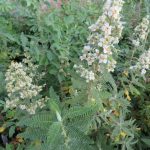
Fernbush
Chilopsis linearis is called Desert Willow because it has narrow, willow-like leaves and is very drought-tolerant. It is a small tree 6’-15’ with an open structure and does not leaf out until May, even late May. It is related to Catalpa tree and Trumpet Vine. The orchid-like flowers are so surprising and breath-taking; ruffled, trumpet-shaped, pink to red-purple, striped purple inside. Chilopsis prefers dry, loose soils, but clay is OK if it is seldom watered. At night it is visited by hawkmoths and is scented of violets according to Bob Nold. He also says it “…is the toughest shrub that can be grown in our garden…I have never watered my plants.” The flowers bloom for a long time and are followed by narrow pods that are not messy. Chilopsis is native to New Mexico, Nevada and Utah. Books often say it is hardy to zone 7, but we have specimens over 10 years old at Harlequin’s and Denver Botanic Gardens has many older trees. Often, the flowering tips die and look better pruned off.
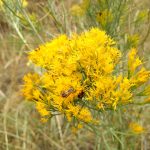
Dwarf blue rabbitbrush
Dwarf Rabbitbrush (Ericameria or Chrysothamnus) has been called The Gem of the Tribe. It is a compact shrub 1’-2’ high and 2’-3’ wide with short and narrow bluish leaves and clouds of golden yellow flowers in throughout autumn. The flowers are very attractive to pollinators; it is a crucial late-season food source, supplying nectar and pollen for native bees, honeybees, Monarch and other butterflies, moths and even hummingbirds. Once established, this shrub thrives with little or no watering. It also provides a welcome display of color in the late season and if it is sheared after flowering, will stay compact and attractive enough for the front yard. It is native near Harlequin’s in the open and dry high desert and steppe, and in much of Colorado.
Prune Now to Keep Woody Plants Smaller
 Do you have a tree or shrub that you’d like to restrain from getting much larger? For the next 3-4 weeks, pruning will be the most effect in reducing the size of woody plants. As we near the Summer Solstice, this year on June 21, we are approaching the midpoint in the growth cycle. This is the time when the days are longest and sunlight is strongest in the northern hemisphere. Woody plants start growing rapidly in early spring using energy that was stored in the roots and branches last fall. By mid-summer, the tree’s resources are being stored in the foliage to support photosynthesis.
So, when we prune at this time, we are removing these resources for growth. This is why summer pruning slows growth. By late summer and fall the nutrients are again being stored in the roots and branches, so pruning removes fewer growth-inducing resources. This is also the reason that fertilizing in late summer and fall is the best time to strengthen a tree or shrub, and support development of the buds that will become next year’s flowers and fruits. Note that solstice pruning of trees and shrubs that bloom in mid to late summer will remove the current year’s bloom and fruiting potential (Bluemist Spirea, Russian Sage, Golden Raintree, Rose of Sharon, Seven Son Flower, etc.)
Incidentally, If you would like to keep certain tall fall-blooming perennials more compact and stocky and less floppy or top-heavy, you can shear them back by a third to a half in late June/early July. This works well for tall asters and goldenrods, Blue Sage (Salvia azurea), Agastache.
Protecting Trees and Shrubs in Winter
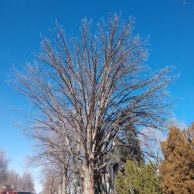
Another January day in the 50s? The buds are swelling, crocus are blooming. Only one other recorded winter was this warm and dry. Will these extreme conditions be harmful to our trees and shrubs? We don’t need to panic; our care can help.
Trees and shrubs do have energy reserves; they have evolved to be capable of living through difficult conditions. Many shrubs need less water and can regrow from their roots. It is normal for buds to be swelling somewhat in January. Trees and shrubs are making leaf buds all winter so that when the day length and warmth of spring arrive, the leaves can unfurl and start photosynthesizing. And if temperatures drop dramatically or suddenly and kill buds, a healthy tree has “back-up” buds and enough energy to develop a new set of buds. However, multiple successive seasons of stressful conditions can cause serious damage or death. Here’s how we can help trees get through difficult times:
Celebrate Earth Day and Arbor Day, by Mikl Brawner
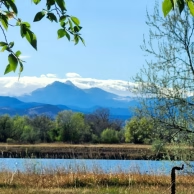 Officially, Earth Day is April 22nd and Arbor Day is April 24th, but since the Earth is our Mother, on whom we depend for our Life, we must protect and support her every day. And Trees are our lungs, providing oxygen, our shelter from heat, and primary support for soil biology, so we need to plant them and continue to care for them. Progress may be slow, but humans are evolving to see individual trees and individual people as partners in communities.
[Read More]
Harlequin’s is Like a Farm. by Mikl Brawner
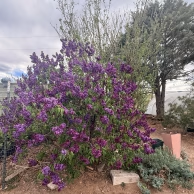 Update: Our GoFundMe appeal has brought in important support for Harlequin’s Gardens, and we deeply appreciate your generosity. We are a little over half-way to our goal of $35,000. We are working to make this a successful year in spite of challenges. Harlequin’s Gardens is not just a store; we are a lot like a farm. We grow thousands of plants with challenges of supply, heat, cold, drought and wind, not to mention rising costs. [Read More]
Celebrate the Good! by Mikl Brawner
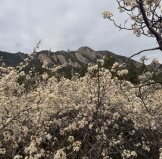 Welcome to a Glorious Early Spring. It’s warm; everything is growing and there are masses of blossoms and fragrance. Please, do enjoy. Our tax dollars are funding wars our Congress did not approve and more than a majority do not want. This is not representative government. What can we do? We have to celebrate The Good, even while enduring the unbearable. We can grow healthy food and both eat it and share it.
We See it Blooming! by Mikl Brawner
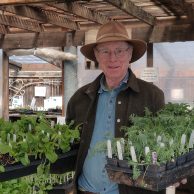
Thank you for the donations coming in to our GoFundMe appeal; it is so important now, and we are so grateful. You are confirming that the values we represent and work for every day are important to you. You recognize what the community would be missing without Harlequin’s Gardens. Of course we already know this. We would not be here without your support. We started promoting and selling native and water-wise plants 35 years ago.
Cheerful Spring! by Mikl Brawner
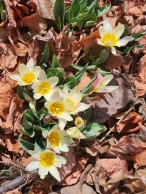
How are we supposed to live our normal lives, going to the grocery store, preparing our garden, when our own government is causing so much death and suffering? It is obvious that our lives will also suffer as a result. We cannot ignore this and we can do little about it right now. Yet we cannot freeze up; we have to go forward. We can support change and we can radiate love and kindness in our lives. Being in Nature and gardening has always been healing for people in painful circumstances. Caring for our children, our loved-ones, our neighbors, our pets and plants, is life-affirming and good medicine. In spite of everything, Life is good. And when we support Life, we are sharing in genuine goodness, and it feels good.
Even Deeper Discounts on Great Trees!
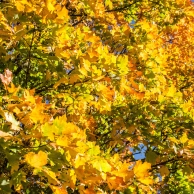
Silver Maple in Fall Color
We need to clear space as our big nursery is on a very little acreage, so we are offering rock bottom prices on some of the best trees for the Front Range. They are large and healthy!
We have the following:
5 Acer saccharinum – Silver Maple in #7 pots @ $50 ea.
4 Miscellaneous trees in #5 pots @ $10 ea.
1 Acer tataricum ‘Hot Wings’– Hot Wings Tatarian Maple in #5 pots @ $50
1 Ulmus davidii – David Elm in #10 pots $25
3 Syringa reticulata – Japanese Tree Lilac in #10 pots @ $50 ea.
1 Acer ginnala – Ginnala Maple in #10 pot @$50
2 Caragana arborescens – Siberian Peashrub in #15 @$75 ea.[Read More]
Terrific Trees for Colorado – on Sale!
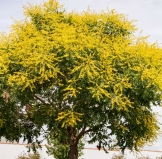
It’s risky to plant B&B (Ball & Burlap) trees this late in the season. But it’s a great time to plant our Container-Grown trees (like the Golden Rain Tree above)! Why the difference?
A container grown tree has a complete, healthy root system that’s able to start growing in your landscape as soon as it is planted. A B&B tree has been dug from the field where, unfortunately, about 60 to 90% of its roots have been left behind. This means the tree will struggle, needing a lot more water and physical support to establish. A container-grown tree will ‘catch up’ to or surpass a B&B tree in size in just a few years.
CLOSE-OUT SALE on beautiful Patio Trees in classy, outdoor ceramic pots, AND select trees.
Our 21st Century View of Soil and Plant Health
 The gardening movement that places soil health at the center of plant health has been where Harlequin’s Gardens has experimented, succeeded and educated for the past 33 years.
Mikl’s taking the movement well into the 21st Century! Here are his key points for sustainable gardening:
- Soil biology is the high road, not inputs made from fossil fuels or extractive methods.
Getting Your Soil Ready for Spring
Sunny days in March offer the perfect opportunities to prepare your soil for planting. What do our soils need that they don’t already have? – oxygen-air and biology-carbon. Increasing the air and carbon in our soils support soil life which in turn supports plant life. Our tight clay soils that tend to exclude oxygen and are deficient in organic matter can use some help.
If you are starting a new planting bed or reviving a neglected one, adding compost is key to your plants’ success.
Grasshoppers, Japanese Beetles, Flea Beetles, Slugs..oh My!
 There are plenty of insects that eat plants and these can be damaging. At Harlequin’s we usually recommend supporting plant and soil health, creating diversity and allowing some insect damage before acting. With some pests, it is good to be prepared to act quickly, and sometimes there isn’t a good solution. Even poisons, which we never recommend, can be ineffective.
Here are some safe methods and products we have found helpful.[Read More]
Summer Solstice!
 Welcome to Summer! Experientially, summer began last week with several days of intense heat that were challenging for people, pets, other critters, and plants. But in terms of hours of sunlight, the longest day of the year in the Northern Hemisphere will occur this Thursday, June 20 at 2:50 pm here in Colorado, officially beginning our summer season. Mikl has some thoughts on one of the interesting opportunities the Summer Solstice offers for gardeners with trees and shrubs. [Read More]
Summer Pest Management
 With Summer come pest problems. Eggs hatch and spores germinate, and plants are food for all of us folks that don’t photosynthesize. So, what can we do? Share and defend, intelligently.
We have been taught to respond to these pest problems with a war-like attitude: point and shoot, poison and kill. At Harlequin’s we do resort to killing when necessary and we do provide non-toxic products that will kill pests, but first, let’s look at a bigger picture.
Harlequin’s Gardens has not used toxic chemical pesticides, fungicides and herbicides in its 32 year history and we have grown and supplied hundreds of thousands of plants to satisfied customers. [Read More]
Water-Wise Trees and Shrubs for Sunny Locations
 XERISCAPE TREES AND SHRUBS for SUN
Harlequin’s Gardens 303-939-9403 www.harlequinsgardens.com
Note: plants listed in bold are native to our region
TREES
Acer ginnala / Amur maple
Acer ginnala ‘Compacta’ / Dwf. Amur Maple
Acer grandidentatum / Bigtooth Maple
Acer negundo / Boxelder
Acer negundo ‘Sensation’ / ‘Sensation’ Boxelder, male selection
Acer tataricum ‘Hot Wings’ / Hot Wings Tatarian Maple
Aesculus glabra / Ohio Buckeye
Amelanchier utahensis / Utah Serviceberry
Catalpa speciosa / Western Catalpa
Celtis occidentalis / Western Hackberry
Celtis reticulata / Netleaf Hackberry
Crataegus ambigua / Russian Hawthorn
Crataegus crus-galli / Cockspur Hawthorn
Crataegus mollis / Downy Hawthorn
Crataegus monogyna / Singleseed Hawthorn
Crataegus phaenopyrum / Washington Hawthorn
Cupressus arizonica / Arizona Cypress
Gleditsia triacanthos inermis / Honeylocust
Gymnocladus dioica / Kentucky Coffeetree
Juniperus monosperma / One-seed Juniper
Juniperus scopulorum & selections / Rocky Mt. Juniper
Koelreuteria paniculata / Goldenrain Tree
Malus species / Flowering Crabapple selections
Morus alba / White Mulberry
Pinus aristata / Bristlecone Pine
Pinus cembroides edulis / Pinyon Pine
Pinus contorta v. latifolia / Lodgepole Pine
Pinus flexilis / Limber Pine
Pinus ponderosa / Ponderosa Pine
Prunus americana / American Wild Plum
Prunus padus / Mayday Tree, Bird Cherry
Prunus virginiana / Native Chokecherry
Prunus virginiana ‘Shubert’ / Canada Red Chokecherry
Prunus x virginiana ‘Sucker Punch’ / Non-suckering Chokecherry
Pseudotsuga menziesii v. glauca / Rocky Mt. Douglas Fir
Ptelea trifoliata / Wafer Ash, Hop Tree
Pyrus ussuriensis / Ussurian Pear
Quercus bicolor / Swamp White Oak
Quercus gambelii / Gambel Oak
Quercus macrocarpa / Bur Oak
Quercus muehlenbergii / Chinkapin Oak
Quercus undulata / Rocky Mt. Scrub Oak
Robinia neomexicana / New Mexico Locust
SHRUBS
Agave parryi ssp. neomexicana
Amelanchier alnifolia / Saskatoon Serviceberry
Amelanchier aln. ‘Regent’ / Regent Serviceberry
Amelanchier canadensis / Shadblow Serviceberry
Amelanchier laevis / Allegheny Serviceberry
Amorpha canescens / Great Plains Leadplant
Amorpha nana / Dwarf Leadplant
Artemisia cana / Silver Sagebrush
Artemisia filifolia / Sand Sagebrush
Artemisia tridentata / Tall Western Sagebrush
Artemisia versicolor (canescens) / Seafoam Sage
Atriplex canescens / Four Wing Saltbush
Atriplex confertifolia / Spiny Saltbush
Buddleia alternifolia ‘Argentea” / Silver Butterfly Bush
Buddleia dav. nanhoensis cultivars / Compact Butterfly Bush
Buddleia davidii cultivars / Butterfly Bush
Caragana arborescens / Siberian Peashrub
Caragana pygmaea / Pygmy Peashrub
Caryopteris x clandonensis cultivars / Blue Mist Spirea
Ceanothus fendleri / Mountain Lilac
Ceratoides lantana / Winterfat
Cercocarpus brevifolius / Little-flowered Mt. Mahogany
Cercocarpus intricatus / Littleleaf Mountain Mahogany
Cercocarpus ledifolius / Curl-leaf Mountain Mahogany
Cercocarpus montanus / Common Mountain Mahogany
Chamaebatieria millefolium / Fernbush
Chrysothamnus n. ssp. graveolens / Tall Grn. Rabbitbrush
Chrysothamnus naus. ssp. albicaulis / Tall Blue Rabbitbrush
Chrysothamnus naus. ssp. nauseosus / Dwf. Blue Rabbitbrush
Chrysothamnus viscidiflorus / Dwf. Grn. Rabbitbrush
Cotinus coggygria / Smoke Tree
Cotinus coggygria ‘Royal Purple’ / Royal Purple Smoke Tree
Cotinus x ‘Grace / ‘Grace’ Smoketree
Cotoneaster divaricatus / Spreading Cotoneaster
Cotoneaster lucidus / Peking Cotoneaster
Cotoneaster multiflora / Big-flowered Cotoneaster
Cowania mexicana (Purshia stansburyana) / Cliffrose
Cytissus purgans ‘Spanish Gold’ / Andora Broom
Cytissus scoparius ‘Moonlight’ / Moonlight Broom
Ephedra americana / American Ephedra
Ephedra viridis / Mormon Tea
Fallugia paradoxa / Apache Plume
Forestiera neomexicana / New Mexico Privet
Genista lydia / Lydian Broom, Dwarf Broom
Genista tinctoria / Woadwaxen
Hesperaloe parviflora / Red Yucca
Hippophae rhamnoides / Sea Buckthorn
Holodiscus dumosus / Rock Spirea
Ligustrum vulgare ‘Cheyenne’ / ‘Cheyenne’ Privet
Ligustrum vulgare ‘Lodense’ / Lodense Privet
Lonicera k. v. floribunda ‘Blue Velvet’ / Blue Velvet Honeysuckle
Lonicera syringantha v. wolfii / Tiny Trumpet Honeysuckle
Lonicera tatarica selections / Shrub Honeysuckle
Mahonia aqu. Compactum / Compact Oregon Grapeholly
Mahonia aquifolium / Oregon Grapeholly
Mahonia fremontii / Fremont’s Mahonia
Mahonia haematocarpa / Desert Holly
Opuntia species / Cholla Cactus
Perovskia atriplicifolia / Russian Sage
Philadelphus lewisii / Lewis Mockorange
Physocarpus opulifolius cultivars / Ninebark
Juniperus communus/Common Juniper selections
Prunus besseyi / Western Sandcherry
Prunus besseyi ‘Pawnee Buttes’ / Pawnee Buttes Sandcherry
Prunus besseyi ‘Boulder Weeping’ / Boulder Weeping Sandcherry
Prunus tenella / Dwarf Russian Almond
Purshia tridentata / Antelope Bitterbrush
Pyracantha coccinea / Firethorn
Rhamnus smithii / Smith’s Buckthorn
Rhus aromatica / Fragrant Sumac
Rhus glabra / Smooth Sumac
Rhus glabra v. cismontana / Rocky Mt. Sumac
Rhus trilobata / Threeleaf Sumac
Rhus typhina / Staghorn Sumac
Rhus typhina laciniata / Cutleaf Staghorn Sumac
Ribes aureum / Native Golden Currant
Ribes cereum / Wax Currant
Ribes odoratum / Golden Currant
Robinia neomexicana / New Mexico Locust
Rosa ‘Alba Maxima’
Rosa ‘Alba semi-plena’
Rosa ‘Alba Suaveolens’
Rosa ‘Felicite Parmentier’
Rosa ‘Fruhlingsgold’
Rosa ‘Golden Wings’
Rosa ‘Harison’s Yellow
Rosa ‘Henry Kelsey’
Rosa ‘John Cabot’
Rosa ‘John Davis’
Rosa ‘Konigen von Danemark’
Rosa ‘Lawrence Johnston’
Rosa ‘Maiden’s Blush’
Rosa “Banshee”
Rosa arvensis
Rosa ‘Complicata’
Rosa eglanteria / Sweetbriar
Rosa foet. Persiana / Persian Yellow Rose
Rosa foetida bicolor / Austrian Copper Rose
Rosa glauca (rubrifolia) / Redleaf Rose
Rosa hugonis / Father Hugo’s Rose
Rosa woodsii / Wood’s Rose
Rosmarinus officinalis ‘Arp’ / Arp Rosemary
Shepherdia argentea / Silver Buffaloberry
Robinia neomexicana / New Mexico Locust
Spiraea ‘Cheyenne Snowmound’
Spiraea jap. ‘Goldflame’ / Goldflame Spirea
Syringa patula ‘Miss Kim’ / Miss Kim Dwf. Korean Lilac
Syringa prestoniae cultivars / Canadian Lilacs
Syringa vulgaris cultivars / Common Lilacs
Yucca baccata / Banana Yucca
Yucca filamentosa / Adam’s Needle
Yucca glauca / Native Soapweed, Narrowleaf Yucca
Yucca harrimanii / Harriman’s Dwf. Yucca
Soil Preparation Products
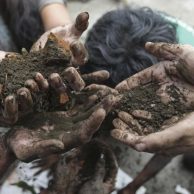
Photo Credit: Aaron Favila – AP, and The Daily Camera.
Our Soil Products for 2024 include:
Here are descriptions of many of the soil products we’ll have available at our store (sorry, we are not able to make deliveries). All of these are sold pre-packaged, and we bag many of them ourselves in refundable, reusable plastic bags. Our Compost Tea is sold in refundable, reusable 1-gallon jugs, or you can bring your own.
We currently do have straw in (not organic).
COMPOSTS
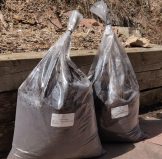
A1 Compost
A1 Eco-Gro: We nearly always have this premier compost in stock. A1 Eco-Gro is a Class I compost made from leaves, grass, chipped branches, and beer wastes. It contains a healthy population of microorganisms and diverse nutrients. It is very stable and will not burn or steal nitrogen. Fine-textured, low in salts, with some woody particles. Use in vegetable and flower gardens, lawns, trees, shrubs. The pH is 8.3; the
NPK 1-1-1.
EKO Compost: Made locally from forest and recycled wood products composted with egg-farm poultry manure. Use in vegetable and flower gardens, lawns, trees, shrubs. Improves soil’s physical, chemical, and biological health.
EKO Lawn Topdressing: a finer textured sifting from Eko Compost, ideal to topdress lawns following aeration and fertilizing; gets food and water-holding capacity to roots; great on perennial beds, too.
Organic Mushroom Compost: from a local organic mushroom farm. Premium food for soil life and wonderful in vegetable gardens, helps to loosen heavy soils and improve aeration and porosity. Limited quantities.
FERTILIZERS
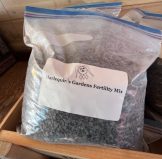 Harlequin’s Gardens Fertility Mix: Harlequin’s blend of certified organic fertilizer, humate, rock minerals, dry molasses, land: sourced coral calcium and mycorrhizae. Great for veggie gardens and all plants. Increases root mass, top growth, soil life, and productivity naturally. This is not just a fertilizer. The combination of ingredients and mycorrhizae act synergistically to support soil fertility.
Yum Yum Mix: 2-2-2 Vegan/Organic fertilizer for alkaline, nutrient-poor Western soils, feeds plants and soil microbes. Made from alfalfa, cottonseed meal, kelp meal, rock dust, green sand, humate. Great for native plants, Xeriscapes. Available in large and small bags.
Richlawn 5-3-2 organic: made in Platteville, CO from poultry manure and wood wastes. Excellent for shrubs and trees and is recommended for raspberries and other small fruits. Also economical and effective for fertilizing lawns.
Alpha One Fertilizer: locally made 7-2-2. An alfalfa-based product with a high organic matter content, very high humic acid value, low pH for Colorado alkaline soils, and is non-burning. It also contains blood meal, cottonseed meal and bone meal. Excellent for vegetable gardens and lawns. 20# and 40# bags.
Age-Old Liquid & Granular fertilizers: For foliar sprays and soil application. GROW formula – great, smell-free choice for houseplants, seedlings, container gardens; BLOOM formula – supports plants ready to bloom and fruit; FRUIT FINISH – perfect at fruiting phase for berries, tomatoes, peppers, eggplants, squashes, cukes and zukes.
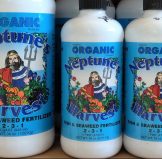 Neptune’s Harvest Organic Fertilizers: We carry several of these excellent liquid fertilizers derived from the mineral-rich North Atlantic Ocean, including Neptune’s Fish & Seaweed Blend, Neptune’s Seaweed Supplement, Neptune’s Tomato & Veg Formula.
Fish Bonemeal – A natural source of phosphorus which is responsible for root development, fruiting and flower production in plants.
Earthworm Castings – Worm castings are soil or compost that had passed through an earthworm. What comes out contains 5x more nitrogen, 2x more calcium, 7x more phosphorus and potassium and many minerals and beneficial microorganisms all in water-soluble and plant-available forms. Worm “manure” will not burn and is safe for all plants, including houseplants. Worm castings support growth, root development, and disease resistance.
Rose Fertilizer: Down to Earth Rose and Flower Mix is our substitute for Mile Hi Rose Feed, and it looks good: OMRI Certified: Fish Bone Meal, Langbeinite minerals, Blood Meal, Seabird Guano, Rock Phosphate, Humate, Kelp.
Corn Gluten – a truly safe Weed & Feed; keeps weed seeds from growing, fertilizes with 9% Nitrogen. Lasts 6 months, Apply in March/April and again Sept/Oct for good weed suppression. Perfect for lawns.
SOIL-BIOLOGY BOOSTERS
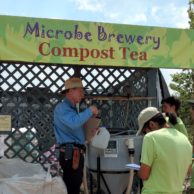
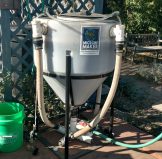 Compost Tea: In our Vortex brewer, we make compost tea with a biodynamic compost, a mineral concentrate, kelp extract, molasses, trace minerals, etc. Compost tea increases the beneficial micro-organisms in your soil, which can bring more nutrients and water to your plants and make them stronger and better able to cope with stress. It can be used full-strength as a mild organic fertilizer, or it can be diluted in water up to 3 times as a soil inoculant. It can also be used to inoculate compost piles to make materials break down faster. Available when temperatures are frost free. Bring your own jugs, or use ours for a $1 deposit (refundable upon return).
Humate
A natural trace mineral, carbon, and humic acid soil conditioner. It is not a fertilizer, but it has a significant effect on fertility by feeding soil microorganisms that make nutrients in the soil available to plants.
Humic Acid
3% humic acid derived from Leonardite. A natural liquid product with the same benefits as Humate – soil conditioning and feeding soil microorganisms that make nutrients in the soil available to plants. It is applied as a soil drench to established beds where granular materials can’t be dug in.
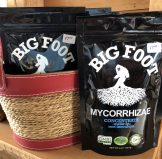 Big Foot Mycorrhizae
Water soluble symbiotic fungus, combining four species of mycorrhizae with biochar, worm castings, seaweed, and rock minerals to provide a strong population of plant allies to bring water and nutrients.
Endo Mycorrhizae
Water soluble symbiotic fungus, inoculate roots to bring water and nutrients. Easy to use and very effective. Good for shrubs, trees, all plants (even cacti!); dissolve in water, wet roots.
Myke Vegetable & Herb
Enhances growth, development, and production; dust the granules on wet roots or sprinkle in seed furrow to improve germination and growth.
POTTING SOILS
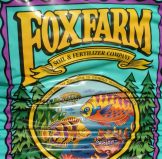 Fort Vee: Compost based, peat, rock dust, blood meal, kelp, bone meal, gypsum, vermiculite, biodynamic preps; Proven locally at Kilt Farm for seed germination and transplanting of seedlings and potting up house plants. Bag 20 qt (18 lb.)
Ocean Forest: FoxFarm’s top grade with sphagnum peat, kelp meal, bat guano, fish emulsion, crab and shrimp meal, nutrient rich, performs well for seedlings and gardening in containers of all sizes. Bag 1.5 cf
Coco Loco: FoxFarm potting soil uses Coconut fiber (coir) instead of sphagnum peat, perlite, worm castings, composted forest products, sandy loam, bat guano, kelp meal, granite dust, oyster shell, dolomitic lime. Looks good, performs well for seedlings and gardening in containers of all sizes. Bag 2 cf (41.7#)
CLAY-BUSTERS
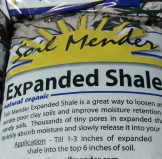 Expanded Shale: a shale product that is mined and fired near Boulder to create a light-weight, porous “gravel” that holds both water and air, and creates optimal housing for microorganisms. Aids water penetration and aeration in tight clay soils (a Real ‘clay buster’).
OTHER SOIL PRODUCTS
Raised Bed Soil Mix
Azomite: 70 minerals from volcanic source, to increase health, crop yields, root development; support immune function, resistance to diseases, and overall vitality of plants; prevents deficiency problems; good for fruit trees, berry bushes
SOIL-RELATED CLASSES – Learn from Harlequin’s expert educators on topics including: building soil micro-biome, composting, soil selections for Front Range gardening, and much more. Sign up early to ensure your seat — our classes fill up fast!
What You Need to Know about Front Range Soil, by Mikl Brawner
Nobody would want to spend their winter weekends pouring over soil catalogues. To humans, soil just isn’t sexy. To plants, on the other hand, soil is very intimate, and as we humans know, intimacy can be wonderful or awful. So even though we don’t have any sexy soil pictures for you, we’d like to seduce you into looking under the covers where your plants roots are sleeping, because this is where the action will be getting warmer in a little over a month.
By now, most of us know that plants get aroused by soil, not dirt. We used to think soil was just physical; stuff to hold the plant up, so we could add a strong chemical fertilizer to make that plant, or grass, grow Fast! But we’re smarter now, because we know that soil is also biological—full of fungi, bacteria, and if it’s healthy, hundreds or even thousands of different organisms—all living and dying in a mutually supportive relationship with the plants. The plants share their carbon nutrients from photo-synthesis, and the soil life shares water, phosphorus and other riches with the plants. This is symbiosis—and symbiosis is sexy, because it supports Life.
 So even though there is nothing you can do at the moment, very soon, before it’s warm enough to plant, you can start making your bed sexy. Sexy soil sprouts seeds, grows roots and leaves, builds strength, makes flowers and fruit, and defends against pests.
Why bother digging and amending? Why not just plant natives and other tough plants and skip the work? You can….some plants will do OK without much help. But Colorado soils are not Iowa soils. Colorado soils are characteristically deficient in nitrogen and organic matter, and mixing certain amendments with our tight clay allows oxygen and water to penetrate. Oxygen and water are essential to support healthy soil bacteria and other soil organisms. They encourage growth and support plant health.
So how can we support the soil life? Think how Nature does it: tree leaves fall to the earth, dead stems and leaves fall over and after years of snow and decay, a rich layer forms that feeds the soil. We humans are looking for faster results, so we can add already matured compost, healthy animal manures or organic fertilizers and rock minerals, plus, if the clay is very tight, we can add expanded shale. Too much of anything is not a good thing: add 20%-30% compost to new plantings, half the recommended organic fertilizers, a handful of rock minerals, scattered, and no more than 10%-20% expanded shale.
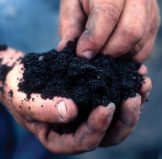 Let the biology do a lot of the work. It’s not hard to add more later; it’s very hard to correct too much. Keep the soil covered with mulch or living plants. Even native plants appreciate some compost to hold moisture and provide a light feeding when they are young. One more thing: avoid poisonous pesticides, fungicides and herbicides, like the plague. They kill or undermine the health of your allies—the soil life. Toxic pesticides are the opposite of sexy; they are like inviting the Grim Reaper into the bedroom. There are effective, non-toxic alternatives.
 What about no-till? Not turning the soil makes sense once you’ve got the soil life in a good environment. Then you don’t want to disturb the symbiotic networks. Then you can feed from the surface; good tilth and worms will take the food down.
Harlequin’s Gardens has been guiding gardeners with soil care for many years. We source our materials mostly from local suppliers, and we’re very picky: we don’t sell feedlot manure or bio-comp with human wastes, or composts that are too hot or too raw. We don’t sell chemical fertilizers because they burn the soil life, disrupt the plant-soil relationship, limit plant nutrition and contribute to global warming. Our potting mixes are expensive because they nourish plants without chemical fertilizers. Sexy soils support the health of the plants and the health of the gardener who grows and eats those plants.
Patio Trees
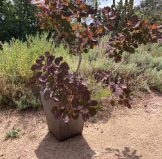
Purple Smokebush
MIKL’s ‘MACRO BONSAI’ PATIO TREES FOR YOURSELF!
Every so often, one of the trees or shrubs we’ve grown or received from a grower displays interesting twists, bends, curves or dwarfing that suggest the character of Bonsai specimens, but much bigger. Mikl has been collecting and cultivating these ‘Macro Bonsai’ for quite a few years. We have some available for sale right now.
Some Good News on the Climate
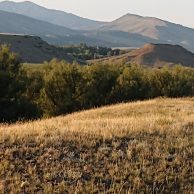
Bill McKibben, environmentalist, educator and founder of 350.org recently wrote, “If the last year has been about a phase change in our planet’s climate, the next year has to be about a phase change in our planet’s politics.”
This past week we did get significant good news about climate action, and we want to share it with you.
Organic Weed Management: Now
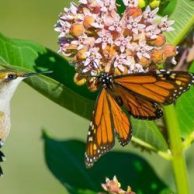
Non-toxic weed management, please!
by Mikl Brawner
The most effective time to remove weeds organically is NOW, when it’s HOT.
Harlequin’s Gardens is carrying two non-toxic* herbicides that WORK. There are non-toxic herbicides on the market that are a waste of money; we’ve tested them. The two we know that work are 20% Vinegar and Avenger Weed Killer.
Dead or Alive?
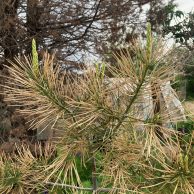
Lace Bark Pine
by Mikl Brawner
As we enter June, most of our trees and shrubs have leafed out, but not all. Some have leaves only three quarters of the way up, and many broad-leafed evergreens are mostly brown. Should we cut them back or replace them? Let’s not, just yet.
Special Woody Plants
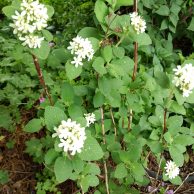
Jamesia americana – Waxflower
Mikl has assembled a collection of some of our most interesting, unusual and hard-to-find woody plants, many of which are just ready for sale now. These include some excellent native trees, shrubs and ground-covers, as well as particularly interesting and worthy non-natives that thrive in Colorado conditions. We’d like to share some descriptive profiles with you here.
Plant Select Turns 26

By Mikl Brawner
Not Just Another Pretty Face
We gardeners see a lot of branded plants in branded pots pushed with a lot of money to make a lot of money. That’s not the story with Colorado’s Plant Select program. Plant Select began as, and continues to be a plant promotion program genuinely aimed at the success of Rocky Mt. gardeners. It’s goals include saving water, supporting pollinators and encouraging a western garden aesthetic.
Blooming Without a Care
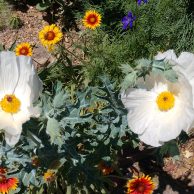
Argemone polyanthemos
by Mikl Brawner
DitchWeeds, Wildflowers, Native Forbs
Call them what you will: when Nature chooses, She knows what She’s doing. And She doesn’t need a human audience. Nature is happy playing to the bees, wasps, butterflies, moths and beetles. We humans can learn a thing or two just by noticing and appreciating Nature’s perfect performance. And that’s just what we gardeners do.
[Read More]
Trees for a Changing Climate and a Resilient Urban Forest
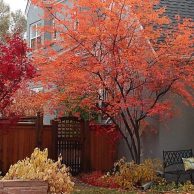
Serviceberry
by Mikl Brawner
If you look at old photos of Colorado Front Range cities, you won’t see many trees. And if you look up native trees of Colorado, you will find a lot of mountain-growing conifers and just a few deciduous trees that grow natively along streams. And yet the quality of life for us humans depends on trees.
Safe Pest Management for Bees, Kids, and the Planet
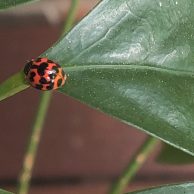 The Good News is that out of about 900,000 insect species currently living on our planet, only 1% to 3% are pests. We do not need systemic neonicotinoids (neonics) or any toxic pesticides to grow plants well. The solution is to employ human attention, biodiversity, nutrient-dense soils, application of nontoxic management, and tolerance.
The Bad News is that most people and most nurseries don’t know the good news. They believe the chemical companies when they tell us that we need to fear and attack insects and fungi as enemies. [Read More]
Supporting our Colorado Trees
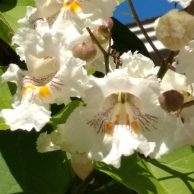 So they can support us!
Last Friday Denver Botanic Gardens hosted a day-long conference on Tree Diversity. This timely subject arises because of the importance of trees to the livability of our cities and suburbs and the degree to which the effects of Climate Change have already begun to affect our urban forest. Trees help cool everything from our gardens and patios and parking lots to our cities and our planet. With stresses like sudden, dramatic temperature changes, drought, and severe windstorms, plus the devastation wrought by the Emerald Ash Borer to our millions of Ash trees, it’s time to re-evaluate the limited palette of trees we’ve been planting for many decades, and investigate new, more resilient possibilities. [Read More]
Beautiful Autumn Colors
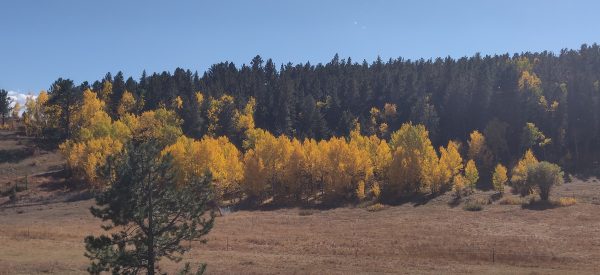
We are all enjoying and appreciating the exceptional fall colors this year. The yellows are especially rich, and the reds are especially vivid. What is going on when the green leaves turn colors and why are the colors so spectacular this year?
We know that the green color of the leaves comes from the pigment chlorophyll that makes it possible for plants to capture energy from sunlight and use it to make the sugars that feed the whole planet. When the long days of summer get shorter and shorter, highlighted by the fall equinox this year on September 22, the plants get less and less sunlight and less and less energy to make chlorophyll. When leaves contain less chlorophyll, other pigments become more dominant. [Read More]
Good News from the Old Guy
 I turned 75 this year so I get to give some perspective on the state of the world. Here is some of the good news that is not being reported these days. I should begin by acknowledging that, oh, yes, there are lots of things that are getting worse, but many things are getting better, too.
In 1976 when I was starting to manage a little apple orchard organically, the general consensus and what I was told, was that “there are two crops you cannot grow organically: apples and cotton”. Lesson: don’t believe everything the experts tell you about what we can’t do. [Read More]
MANAGING WEEDS WITHOUT POISONS by Mikl Brawner
Some people repeat Ralph W. Emerson, saying “A weed is a plant whose virtues remain undiscovered.” But although I appreciate that many weeds do have virtues, I doubt that many gardeners would accept that definition as the final word. Most of us have had extensive experience with Bindweed, Thistle, Goathead, Ragweed, Dandelion and Cheat Grass; not to mention some aggressive natives like Whiplash Daisy, Wood’s Rose and Hairy Goldenaster; and certain herbs like mints, Comfrey and Sweet Grass. So in talking about managing weeds non-toxically, the main point seems to be: How can we keep certain plants under control?[Read More]
BUILDING TOPSOIL AND SOIL FERTILITY by Mikl Brawner
“Where can I get some good topsoil?” That’s a question I hear frequently at our nursery. And I often look wistfully towards the plains and say, only half-jokingly, “You can get good topsoil about 800 miles east of here.” That’s where I grew up, in Iowa, and where two tomato plants feed a family of six. It’s not that local suppliers are trying to deceive us when they sell Colorado clay as topsoil; it’s just that the glaciers didn’t dump three feet of loam on top of our clay.[Read More]
Xeriscape: Native Plants
Achillea lanulosa (Achillea millefolium var. lanulosa) (Yarrow)
Agave parryi neomexicana
Amelanchier alnifolia (Serviceberry)
Amorpha canescens (Leadplant)
Aquilegia barnebyi
Aquilegia caerulea (Rocky Mt. Columbine)[Read More]
Lycium (Goji Berry)
Whoever heard of Goji Berry 20 years ago? Now, with the current interest in superfoods, phytonutrients and antioxidants, Goji Berry juice and dried fruits can be found in many urban grocery stores. The 70+ species of Lycium are found on most continents and one species, Lycium pallidum, is native to Colorado. But the best known and most grown Goji is Lycium barbarum, the Chinese Wolfberry, also known as Matrimony Vine, Desert Thorn and Boxthorn. What is not commonly known is that this exotic superfood can be easily grown in Colorado.[Read More]
Insectary Plants: Let Nature Manage the Pests
It’s a common idea that Nature, left to its own devices, comes to some kind of balance. If one organism gets too numerous, something else will increase to reduce that population. In the case of monocultures created by humans, there is an enforced imbalance that has to be propped up with lots of energy and effort. So in the pursuit of sustainability, humans are opening our eyes to the possibility of biomimicry, imitating Nature. We are coming to the realization that biodiversity is far healthier and less energy intensive than monocultures born out of the aggressive hubris to control Nature. “Let Nature take her course.” But we can stack the deck in human favor first.[Read More]
Biological Farming & Gardening
A newer science that’s not tied to petroleum profits is emerging to challenge the industrial approach to agriculture and gardening. Enormously powerful, politically connected giants like Monsanto, Bayer, and Dupont will continue to make money, but after 60 years of dominance, the “Better Living Through Chemistry” model can no longer hide its fatal flaws. Mountains of evidence now point to the downside of chemical agriculture: poisoning the earth, driving global climate change, causing major health problems, killing pollinators, destroying the life of the soil. The good news is that a more long-range, wholistic view called Biological Agriculture and Gardening is starting to take its place.
This “new” method is based on an entirely different paradigm or model of plant culture. Instead of the bellicose mentality that birthed the pesticide-fungicide-herbicide and chemical fertilizer approach, the biological approach taps the same cooperative relationships that Nature herself has long employed successfully for survival and sustainability. Instead of seeing bacteria as germs, fungi as diseases, and insects and weeds as pests, the biological model sees Nature as brilliantly creative and diverse, and basically good. The scientific truth is that few insects, bacteria and fungi are harmful; most are beneficial or essential to plant development, plant health, and subsequently for human health.[Read More]
Xersicape: Non-Native Plants
Acantholimon glumaceum
Acantholimon hohenackeri
Acantholimon litwanovii
Achillea ‘Moonshine’
Achillea ageratifolia (Greek Yarrow)[Read More]
Curl-Leaf Mt. Mahogany
Curl-leaf Mt. Mahogany (Cercocarpus ledifolius)
This tall shrub or short tree is a beautiful broadleaf evergreen that is native to Colorado and much of the west up to 9000’. It’s narrow, curled leaves are an adaptation to reduce exposure to drying sun and wind; consequently it is very drought resistant, needing no irrigation after being established.The leaves are also thick, leathery, resinous and dark green above and pale below. Flowers are mostly inconspicuous and the fruit is only 1/4” long with a 2”-3” long silky tail. In dry weather these tails twist like a cork screw and with a little wind can be carried a good distance and then they will screw the seed right into the soil.[Read More]
A Xeriscape Harvest
For most people, harvest time brings to mind a cornucopia of veggies and fruits. For me, the end of this 2009 growing season has been a fruition of over 20 years of cultivating a xeriscape where most of the trees and shrubs have been watered 5 times a year or less. These self-imposed watering restrictions have demonstrated which plants can survive and thrive under serious water shortages. I have done this both to encourage water conservation in Colorado and to demonstrate that a dry western landscape can be beautiful.
The reason why 2009 feels like a harvest year is because many of my woody plants are now mature and because with all the rain we’ve been getting, my xeriscape has never looked better at the end of summer.[Read More]
Eve’s Favorite Fragrant Roses
These are among our favorite fragrant roses. While we grow and sell many of these, they are not always ready to be put out for sale, and quantities are always limited! Come by and view our current selection, and check our 2024 Rose list.
-
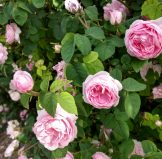
Banshee Rose
“Banshee” (found) Z 4, dbl pink 2″ early & long-blooming May-June, rich sweet damask fragrance; large shrub or climber, no die-back, very disease resistant, very tough & tolerant of low water, poor soil, shade, once established. Distinctive matte foliage, fall color- purple, orange. Common in old neighborhoods all along the Front Range.Not terribly prickly. Cut armloads for big fragrant spring bouquets!
- “Broadway Perpetual” (found, Boulder) Z 5 (4?) Large dbl strong pink quartered, deep old-rose perfume, spring & fall, sporadic in between. Good cut-flower. Seems somewhat shade-tolerant. Strong arching growth to 7’. Potential climber? Healthy foliage, moderately prickly.
-

Fairmont Proserpine, courtesy High Country Roses
“Fairmount Proserpine” (found, Denver)
- Abraham Darby (English) Z 4-5. Large, dbl, cupped, pink shading to apricot, repeats very well, strong scent, old-rose/fruity, good cut-flower. Heavy blooms are sometimes pendulous. Large, bushy shrub 5-6’ x 5-6’. Glossy disease-resistant foliage, stout canes are moderately prickly.
- Alchymist (Lg. Flowered Climber, lg.shrub) Blooms very large, warm apricot shades, very double, looks English, very fragrant, haven’t grown.
- Apothecary’s Rose (Gallica) Z 3. Very old; semidouble deep pink blooms in late spring on thin, erect prickly canes to 4’. Delicious sweet old-rose perfume. Tolerates some shade but may mildew. Perfect for herb garden.
- Baronne Prevost (Hyb. Perpetual) France, 1842. Z 5 (4?) Fat globular buds open to large 4″, flat, very double, loosely quartered deep “rose-pink” blooms with rich damask perfume, repeats well through season. Rather thorny, large arching shrub to 6’x6’ or more. Good for wrapping on pillar, pegging, self-pegging, or climbing.
- Cl. American Beauty (Lg. Fl. Climber) 1909 USA, Wichurana hyb. Z4 Large blooms are double, deep pink, paler on undersides, borne in small clusters on longish stems, strong Damask scent. In 1940’s considered the most fragrant climbing rose. Leaves dense & glossy, healthy. Vigorous growth to ~10’, tolerates some shade, neglect; profuse in June, sporadic repeat (esp. in cool summers).
- Constance Spry (English) Bounteous, very large double pink flowers in late spring on a large arching shrub easily used for draping or climbing. Bred from the Gallica ‘Belle Isis’. Fragrance includes a hit of ‘myrrh’, present in a number of David Austin’s English roses.
-
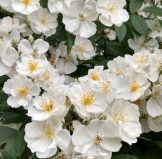
Darlow’s Enigma
Darlow’s Enigma (Cl. Hyb. Musk ?) Vigorous large shrub or climber of unknown origin with very disease-resistant, handsome glossy foliage. Small white semidouble flowers in clusters, borne throughout the season , are very sweetly scented. Very shade-tolerant. Zone 4.
- Desiree Parmentier (found Gallica) Probably incorrectly identified as Desiree, this rose is found in old neighborhoods throughout the Denver metro area. Healthy, soft apple-green foliage on a shade-tolerant, suckering shrub to 3’ in sun and taller in shade. Flowers are unique – many deep pink petals tightly packed, radiating out from conspicuous green ‘eye’, forming a dome–shaped blossom. Blooms in June. Rich Old-Rose perfume. Buds also unique, appearing to have had their tops cut off. Blooms are produced singly, not in clusters, making it ideal for cutting. Thrives on neglect once established. No die-back in the Denver-Boulder area. Prickles are numerous but very short and non-threatening.
- Fair Bianca (English) Lovely very double white blooms of old-rose style open flat and are produced in several flushes through the season on a shrub to 3’. Not very vigorous, but the fragrance is unique, including elements of licorice, lemon and myrrh.
- Felicite Parmentier (Alba Hyb.) An outstanding, classic old rose, with compact, bushy growth to 4-5’ tall. Foliage is matte, slightly greyish green, and completely healthy, even in considerable shade. Blooms are small (1 1/2″), blush pink, double and densely double, borne in small clusters, with exquisite fragrance that seems to match its appearance perfectly. No winter die-back in our area, hardy to at least Zone 4.
- Gertrude Jekyll (English) Bred from the Portland rose ‘Compte de Chambord’, which may be a better rose. Gertrude got HUGE in my garden, to 9’ tall, likes to bloom mostly at the top of the canes, hasn’t repeated very well, and is incredibly well-armed. Nevertheless, she’s worth growing for her fabulously fragrant, large, oldfashioned, double,flat pink blooms. Best grown with strict discipline (hard pruning) and protective armor.
- Golden Celebration (English)
-
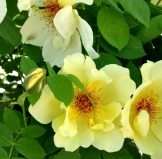
Golden Wings
Golden Wings (Shrub) A healthy, vigorous, open shrub to 5-6’ tall and wide, with large, almost single lemon yellow blossoms accented by showy dark red stamens. The petals fade quickly to white in our strong sun. Blooms all season. Keep dead-headed ‘til August , then allow it to form attractive red hips. Hardy to Zone 5, maybe 4.
- Heritage (English)
- Jude the Obscure (English) Weird name for a gorgeous flower, double, globular, shading from cream to yellow to apricot, sometimes pinkish. Flowers ball in wet or very hot weather. Blooms occur in clusters of 3 to 8. Strong fruity fragrance with elements of peach, mango, etc. With disciplinary pruning, the shrub will be 5’x5’. Bright green foliage is moderately disease-resistant; Keep dead-headed to ensure good repeat.
- Konigen von Danemark (Alba) The deepest colored of the Albas, Konigen bears medium pink, very double, 2″ flowers in June, blessed with delicious Old Rose fragrance. Totally healthy, matte grey-green foliage on arching canes to about 5’. Tolerates some shade. Hardy to Zone 4.
- Louise Odier (Bourbon) Fully double, 2″ camellia-like pink blossoms are borne in great profusion in late spring, and again in pretty good numbers through the season. The fragrance is rich Old Rose. The shrub is very vigorous, theoretically to 5’x5′, but mine is 9’x9′, suggesting the need for a pillar, trellis or wall, or strong pruning. Mine never suffers any die-back, and is pretty healthy. Repeat bloom is best if you deadhead until some time in August. Pretty thorny, but not as bad as Gertrude.
- Madame Hardy (Damask) One of the most choice Old roses. Beautiful, medium-sized pure white blooms with a green button eye on a robust, upright shrub to 5’-6’ tall. Very fragrant. June blooming, Zone 4.
- Madame Isaac Pereire (Bourbon) France, 1881. Large, purplish, deep pink, cupped blooms are sumptuous in their appearance and perfume. Blooms are carried on short laterals from strong, large canes, and can be used as a climber to about 7’. Blooms are best if protected from very hot sun, but the plant is not really shade-tolerant. Hardy to Zone 5.
- Mister Lincoln (Hyb. Tea) Black-red buds open to cherry red, richly fragrant at all stages. Blooms are large (4-4.5″), double, scrolled, high-centered, good cut. “Bush is upright and almost naturally urn-shaped, to 3’ or taller. Susceptible to mildew. Robust grower, reliable bloomer.” I haven’t grown this one yet.
-
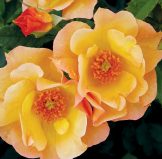
Morden Sunrise
Morden Sunrise (Canadian Shrub) A compact shrub, to about 3’x3’. Seems pretty tough in our test/display garden. Semi-double flowers open from orange buds, are 2 1/2 to 3″wide and shade from soft, tawny yellow to apricot pink, to orange. Moderately strong Tea rose fragrance is unusual for a Canadian rose, which are generally scentless. Hardy to Zone 3, almost continuous blooming.
- Nuits de Young (Moss)Laffay, France 1845. A must for its fabulously purple flowers, this rose has also been called “Old Black”. Flowers are almost double, very fragrant, with velvety maroon-purple petals emphasized by golden stamens. Mossing on buds and flower stems has a pleasant lemony pine scent when rubbed. The shrub is compact and erect, to 3 or 4’ tall, and suckers. Foliage is small and dark green. We found this rose growing in Boulder’s Columbia Cemetery, where it has survived mowing, drought, and complete neglect for at least 65 years.
- Pink Peace (Hyb. Tea) France, 1959. Enormous, intensely fragrant, very bright pink, double, with somewhat old-fashioned form, sumptuous flowers throughout the season on an upright bush. A slow starter, not exactly vigorous, but worthwhile for the blooms, which are long-lasting when cut. We know one bush in Paonia that’s about 40 years old, 4.5’.
- Reine des Violettes (Hyb. Perpetual)
-

Rosa spinosissima
Rosa spinosissima (Scotsbrier) (Species) My favorite species rose, as it perfumes my gardening hours with its strong, very sweet scent – one of the few fragrances that really carry in our dry air. The 4’ tall shrub is shade tolerant, and has very small leaves on gracefully arching canes that are covered with the lovely pure white single blooms for about 2 1/2 weeks in May. Hardy to Zone 3.
- Rosa Mundi (Gallica) Ancient, sport of Apothecary’s Rose. Named for Rosamond Clifford, mistress to Henry II. Identical in all respects to Apothecary’s, except: Dramatic semi-dbl blossoms blush-white randomly striped & splashed with crimson & pink. Petals dry beautifully for potpouri.
-
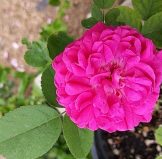
Rose de Rescht
Rose de Rescht (Portland or Damask Perpetual) A very distictive Old Rose, supposedly discovered in Iran. The flowers are small, 1 1/2″ or slightly larger, rich fuschia-red with strong purple tints, aging to magenta, very double, tightly formed rosettes, almost pom-poms, produced in small clusters amid lots of foliage. Exceptional strong Damask fragrance. Excellent repeat. The shrub is healthy, compact and bushy, to 4-5’ tall and wide. Canes are quite prickly. Hardy to Zone 4.
- Rose du Roi (Portland or Hyb.Perpetual) Lelieur, France 1815. This is a rose with a story. Bred by a French nobleman loyal to Napoleon (the second one), it was appropriated and re-named by the King, Henri XV, when he regained power. It’s also an important rose for having introduced “red” color to rose breeding in 19th century Europe. The plant is compact and bushy, growing 3-4’ tall and wide, with large leaves (I’ve noticed they’re light green in spring, with later growth being dark green with grey undersides), and prickly canes. The flowers are fabulous, fairly large, double, red mottled purple with pink reverse, loosely formed when open, and very richly scented. Repeats, with especially good display in early fall. Hardy to Zone 4-5.
-

Sharifa Asma
Sharifa Asma (English) Slow to establish, but worth the wait. Blooms are large, double, delicate shell pink, cupped, and blessed with a strong Old-rose and fruity (litchi) fragrance. Leaves are dark green, slightly leathery, and healthy as long as the shrub is not in too much shade. Growth is upright to 4’.
- Stanwell Perpetual (Hyb. Spinosissima) The earliest repeat-blooming rose to begin flowering in my garden, vying for 1st with Reine des Violettes. Bred from R. spinosissima and Autumn Damask. Canes are very prickly, arching, dark red, clothed in very fine-textured foliage, and loaded with blooms in several flushes through the season. Flowers are double, small to medium-sized, blush pink opening flat and fading to white. Very sweetly scented, with characteristics of both parents. Growth is awkward the first few years, but then fills out nicely. Hardy to Zone 4.
- Sweet Chariot (Mini) Tall for a miniature, to 2’. Small foliage and small pom-pom flowers in large clusters, unusual purple-pink color and lovely fragrance. Blooms repeatedly through season. Hardy to Zone 5.
- Sydonie (Hyb. Perpetual) Extremely reliable repeat bloom, exquisite Damask fragrance, unique flower form. Flowers are “rose-pink”, 2-2 1/2″ very double, very quartered, with strongly in-curved center petals. They are borne on very prickly arching canes on a bush that’s supposed to be 3 1/2’ tall and wide. NOT. Mine is 8’x8’ and I’m planning to do some hard pruning. Hardy to Zone 4-5, I’ve never had any winter die-back.
- Tradescant (English) I haven’t grown this one yet, but I’ve seen it elsewhere and loved the blooms. They are velvety black-red, very double, opening flat and quartered, 2-2 1/2″ wide, with a powerful Old Rose fragrance. Good cut-flower, holding its shape and color several days. Hardy to Zone 5. Reportedly grows best with hot summer weather.
- Wise Portia (English) Compact, to 2 1/2’, I grow 2 of these planted very close together to form one shrub. Very large double flowers are a unique raspberry red, rosette shaped, with uniquely pointed, lotus-like petals. Heavy-blooming, richly scented, borne singly or in sprays. Excellent repeat if kept dead-headed ‘til late summer. Then it will form large, red hips. Modern-looking medium green foliage. Provide good light and good air circulation.
- Zephirine Drouhin (Climbing Bourbon) Bizot, France 1868. Hardy to Zone 5-6. Our strain is definitely hardy in Boulder/Denver. Completely thornless, somewhat shade-tolerant, vigorous tall shrub or climber to 12’ on wall or arbor. New foliage and canes are burgundy colored. Flowers are loosely double, warm deep pink, medium-sized, profuse in spring and repeats regularly into autumn. Strongly scented- fruity Old-Rose.
Some fragrant roses to try at higher elevations:
Alba Semi-plena
Alba Suaveolens
Maiden’s Blush
Chloris
Konigen von Danemark
Rosa spinosissima
Rosa rugosa alba
Rosa rugosa ‘Magnifica’
Metis
Banshee
Gallica roses
Centifolia roses
Therese Bugnet
Morden Sunrise
Rugosa roses
A Soil Revolution
In this article, Mikl explains why Soil Health matters.
From Peak Soil to Soil Revolution
 We are having a real revolution in our relationship with our soils. The turning point is our change in focus from soil fertility to soil health. In the last 60 years of the “Green Revolution” (i.e. the petrochemical boom), soil was viewed as a physical structure and fertility was viewed as a measure of chemicals in the soil — primarily NPK, nitrogen, phosphorus and potassium. The petroleum industry could make these macronutrients from natural gas, which make plants grow but often in poor health. Weak plants attract insect pests and fungal diseases, so more petroleum in the forms of insecticides and fungicides added to the success of the oil industry. But this approach has led to “Peak Soil” where land is losing productivity, crops are losing nutritional value, the soil is eroding at extreme rates, and the health of animals and people has declined.[Read More]
How Do We Manage Fireblight
Colorado is said to be the worst state in the US for fireblight, and 2018 was considered by many to be one of the worst years in Colorado. Fireblight is a serious disease affecting apples, crabapples, pears, Mountain Ash and hawthorn, and sometimes quince and pyracantha (supposedly up to 73 species of plants).[Read More]
Drought Resiliency
Drought resiliency is normally thought of as the ability to spring back after a drought or maybe it means tolerant of drought. But when a plant is stressed by having little water, its ability to survive and even thrive is influenced by other factors, some of which are Health, Vitality, Strength and Immune function.
The word Sustainability has become popular as a goal, but the word is too static. A more active word is Re-generative. We can “create” gardens that not only can maintain, but also support the abilities of Life to regrow, multiply, defend itself against predators and add to the vitality of other living things around it.[Read More]
July Color in the Xeriscape Garden
Xeriscape? Are you kidding? With all the rain we’ve been getting, isn’t the drought over?
As I understand our current water situation, water restrictions are still in effect for the Denver area, Colorado Springs has had a very dry spring until July and is under water restrictions, the Western Slope has been dry, New Mexico has been dry until July; and Montana and South Dakota are having severe droughts. What this means is that the wonderful moist season we are enjoying in the Denver area depends on ephemeral conditions we cannot count on. In addition, much of our water comes from the Western Slope where weather patterns can be quite different from our own, so even if our gardens are getting watered, it doesn’t mean our reservoirs will be full. We live in a semi-arid environment and water conservation and xeriscaping will be increasingly important as our population grows, especially if global warming increases our temperatures.[Read More]
On The Dry Side
Plants that can survive and even thrive with little water are always valuable in Colorado where we get 15”-18” of precipitation most years. But when a real drought comes or when limited snowfall in the mountains means water restrictions down here, then xeriscape plants are essential in our gardens
Because the well at Harlequin’s Gardens nursery is so poor, my rockery garden has been on water restrictions for the last 25 years. Here are some plants that have performed well in my garden that is watered only 3 to 7 times a year.[Read More]
Some Drought-Tolerant Gems
Plants that tolerate or even revel in hot, dry conditions are always in vogue in Colorado. We may be blessed with moisture in the spring, as we had this year, but by June or July our vegetables need regular watering and east coast woodland plants are melting. There are some plants, however that are adapted to hot and dry conditions. Some are natives and some are from other regions of the world that have similar drought stresses as we have here.
These gems are ones that we have tested at Harlequin’s Gardens where none of our demonstration gardens are watered more than once a week, and others only 5 or 6 times a year. We can recommend these plants as successful and enjoyable under mandated or self-imposed watering restrictions.[Read More]
The 2002 Drought
Drought, Water Restrictions and Gardening: How Can They Go Together?
I think we were all caught off guard by this drought, by how fast we were forced to see dying trees and brown lawns and by the difficult discipline of watering restrictions. This was especially true in Boulder and Lafayette where mandatory restrictions began in May. Actually, 2002 is the third year in a genuine drought, which some of us without city water supplies can confirm. This year all around Boulder, Red Twig Dogwoods turned brown, linden leaves were scorched, Norway Maples suffered, many viburnums were looking very stressed, and trees in medians defoliated or died. Gardeners caught in the crunch between weeks of hot, dry weather and few opportunities to water, held off most of their planting projects; some started talking about moving away to where they could garden. For Denver and other Colorado cities, next year could be much worse.[Read More]
Three Xeric Plant Select Favorites
Here are three hardy, xeric and floriferous plants that are successful in western gardens.
Russian Hawthorn, Crataegus ambiguus was tested at the Cheyenne Horticultural Station and found to be well-adapted to the west. It is native to Armenia, Iran, Russia, Ukraine and Turkey. I have a 20 year-old specimen growing without irrigation along with many native shrubs. The mature size is 15′-20′ high and wide in our area. The branches grow quite horizontally which gives it natural character. It lends itself to a bonsai/character style, and I have been growing one in a big ceramic pot for 10 years. The finely cut leaves give a soft appearance and in May it blooms with profuse white flowers that are attractive to bees and butterflies and followed by showy red berries in August/September that are eaten by birds. Very dry conditions can result in fewer flowers and fruit. Like apples, to which Hawthorns are related, the seeds contain some cyanide, so should not be eaten, but the berries are edible and make a respected heart tonic.[Read More]
Beyond GMOs and Petroleum Farming
Four years ago I was among the group of Boulder County residents who were asking to ban GMOs on our publically-owned farm lands. The Commissioners at that time voted to add GMO Sugar Beets to the already approved GMO corn, but they also increased the acreage of land to be used for organic agriculture and agreed to take another look at neonicotinoid use if there was new evidence. There is now new evidence on GMOs, Roundup that is used on 80% of GMOs and on neonicotinoids linked to the death and weakening of all our insects, including bees.
So in 2011, in order to find out if there were practical non-toxic options to manage larger pieces of farm land (like 200-300 acres), I traveled to Ohio to an Acres USA Conference. Attending that conference were over a thousand farmers and ranchers. ACRES has been guiding eco-agriculture for 45 years now; the last conference I had attended was in 1977. I met farmers and attended talks by farmers who were managing 100-1000 acres without GMOs and without toxic chemicals.[Read More]
Xeric Perennials that Thrived During the 2002 Drought
Xeriscape Perennials Thriving in 2002 Drought
Acantholimon glumacium
Acantholimon hohenackeri
Acantholimon litwanovii
Achillea ‘Moonshine’
Achillea ageratifolia (Greek Yarrow)[Read More]
Quaking Aspens
Leave them to the Mountains OR Plant them at Home?
Populus tremuloides or Quaking Aspen is not only one of the best-known native trees here in Colorado, but it is said to be the most widely distributed tree of North America. Its narrow, roughly pyramidal form is commonly 25’-30’ tall and 15’-20’ wide, although it can get much larger. The leaves are shiny, dark green above and light gray-green beneath which makes the tree shimmer in the breezes. Also its whitish trunk adds to its attractive architecture. Then in the fall the leaves can turn a rich golden yellow which look glorious on the tree and lovely on the ground. It has a suckering habit which inclines it to clumps and which has put aspen in the running for the world’s largest being.[Read More]
Bigtooth Maple
Bigtooth Maple, Acer grandidentatum, is native to the far southwest corner of Colorado in a place known as Sleeping Ute Mountain. It is common in canyons, northfacing slopes and along mountain streams in Utah, Wyoming and west Texas from 5000′ to 8000′. Although most often listed as a separate species, Bigtooth Maple is sometimes called Western Sugar Maple, therefore, a subspecies of Acer saccharum. Its other names are Canyon Maple and Wasatch Maple.[Read More]
Bur Oak
BUR OAK—QUERCUS MACROCARPA-MOSSY CUP OAK
One of the most successful oaks for Colorado is the Bur Oak. It is adaptable to our clay soils and tolerates our alkaline conditions better than most oaks. In harsh, droughty areas this tree can be a low shrub, but on rich, river-bottom land can get 170’ high and 6’-7’ in diameter; but most often grows 50’-70’ high. The trunk is often thick and short with deeply furrowed bark, and the stout branches often extend almost straight out making the tree as broad as tall. The leaves are deeply lobed only in the bottom half and these lobes are rounded not pointed as with many other oaks. The acorns are distinctive in that there is a mossy fringe around the cap. The overall effect can be quite grand and sculptural, sometimes like a Chinese painting. The short taproot is surrounded by a massive root system which is strongly competitive. This is why old specimens often are standing alone.[Read More]
Catalpa
Western (Northern) Catalpa- Catalpa speciosa
It is surprising that a tree that looks so different from the other Colorado-adapted trees, is so successful. What stands out immediately are the huge leaves which can be 3”x 6” or even 6” x “12” and are heart-shaped. And in June, this large shade tree blooms exquisite, ruffled, bell-like, white, fragrant flowers with yellow and purplish coloration .And in the fall the passerby might be surprised to see the long thin pods 10”- 18” long.[Read More]
Champion Trees Show More Possibilities
Growing trees in Colorado, especially big shade trees, can be very challenging. Few of the specimens in our community “forests” are native to Colorado, and areas where big trees are abundant are often so different from our conditions that those trees do not adapt well here. Some of the difficulties trees face here are: alkaline soils, nutrient-poor and shallow soils, low humidity, hot and drying winter sun, strong winds, untimely wet snows in spring and fall, rapidly changing temperatures, and low rainfall. Add to these the confining root zones in which many trees are growing in urban environments, and it is easy to understand why our trees are often stressed, subject to borer and fungus problems, broken and short-lived.[Read More]
Kentucky Coffee Tree – Gymnocladus dioica
This member of the pea family (Fabaceae) can get 50’-60’ high and 30’-40’ wide, though most that I’ve seen in Colorado are under 45’. Nearly everybody thinks of this tree as interesting or picturesque.The branching is more open than most trees and the bark is gray to dark brown, rough and deeply ridged even on small branches. The leaves are bluish-green and somewhat tropical-looking being double compound, each one 18”-24” long and forked with small leaflets alternating on the stem. Fall color is yellow. As the species name implies, this tree is dioecious, having the male and female flowers on separate trees. The flowers are greenish-white, supposedly fragrant and not conspicuous. On the female trees, tough, leathery seed pods follow that are 4”-6” long and 1 1/4”-2” wide. These hang on after the leaves fall and into the winter.[Read More]
Hackberry
Common Hackberry (Celtis occidentalis)
Why would anybody be interested in a tree that is just the common variety? In this case, we Coloradoans can be very interested because “common” means it will grow just about anywhere. In our harsh country that provides a good living for people planting and replanting and pruning and re-pruning trees, the Common Hackberry is somewhat of a relief. It will grow to 7000’. Our 25 below zero winters do not bother it as it is hardy to zone 2, which helps a lot in adjusting to our sudden warm-to-cold swings. It is also not picky about soils, tolerating both acidic and our usual alkaline conditions; rocky is fine, heavy clay is OK; it really likes rich, moist, but grows right along in poor, dry, windy, polluted cities. [Read More]
How to Plant a Tree
Planting a tree puts us in touch with one of the most essential parts of a tree that is often overlooked—the roots. When a seed germinates, the first part to develop is the root. The seed has stored nutrients, but if the plant is to live, it must immediately make a relationship with the nourishment of the earth. Then it can make the sprout that pushes into the sunlight to start photosynthesizing. So the first matter of importance in planting a tree is to honor its roots—their condition, their future environment and their nourishment.[Read More]
Interview with Alex Shigo
Alex Shigo is a world-renowned authority in arboriculture, the science of trees. His delving curiosity and sharp scientific analyses carried him beneath the bark into a realm previously little understood. He worked 26 years for the US Forest Service investigating decay in trees, and through the process of dissecting over 15,000 trees with a chainsaw, he has uncovered much valuable information about tree structures and tree systems that have revolutionized the practice of tree care. As he puts it in the preface to his book Tree Pruning, “A major problem throughout the history of tree pruning has been the scant attention given to pruning as it affects the health of trees, while great attention has been given to pruning as it affects the desires of man.” Even though he is busy writing, giving workshops and talks and doing consulting, he agreed to answer some pressing questions for The Colorado Gardener.[Read More]
Mountain Ash
European Mt. Ash (Sorbus aucuparia)
This is surely one of my favorite ornamental trees for the front range which can be used up to 8000’.It is an upright oval tree spreading with age 25’-30’ tall aned 15’-25’ wide. If cared for, it will be attractive throughout the season. The bark is a shiny, orangy-brown. The serrated, compound leaves are dark green and in the fall turn yellow and reddish-gold. The clusters of flowers are white, blooming in spring with a peculiar fragrance that some people appreciate more when they’re gone. Clusters of red-orange berry-like fruit follow which color the tree through the fall, accenting the orangy leaf colors. These fruits are greatly loved by the birds and are in fact edible for people. They are known as Rowan berries and are used in Europe in making a brandy. In ancient times the Rowan tree, also know as the Quickbeam, was greatly revered by the Druids and used against lightning and witches’charms. The berries were considered extremely valuable having the “sustaining value of nine meals”, healing the wounded and giving a man the strength of ten men. I had to try this, of course, and found I couldn’t eat even 10 berries. Later I learned they need to “blet” or shelf-ripened. The birds do spread these around, and Mt. Ash seedlings are not uncommon.[Read More]
Pinyon Pine – Pinus edulis (Pinus cembroides edulis)
The Pinyon Pine has several advantages over other evergreen trees in a Colorado landscape. For one thing, its size doesn’t consume so much horizontal space. Compare the modest mature Pinyon at 10’-15’ in diameter with Austrian or Ponderosa at 25’-35’ diameter or Blue Spruce at 30’-40’ diameter. A few of these “average” sized evergreens look innocent when freshly planted, but who hasn’t seen them blocking sidewalks and doorways, tearing off gutters and shading solar collectors and windows in the winter? The Pinyon with its gently rounded top only gets 12’-20’ high, which suffices for many screening needs and still leaves the view. If it isn’t crowded, it stays branched to the ground with dense foliage of short, medium green to gray-green needles, two to a bundle. The cones are small 1 1/2”-2” long, brown to reddish-brown, which open to a rosette form and in the wild yield Pinyon “nuts”. These seeds are good-tasting and oily, with a piney flavor much appreciated by birds, animals and humans. They are also nutritious, being higher in protein and carbohydrates than pecans, but lower in fat. For some reason , these “nuts” are unlikely to develop in small urban plantings.[Read More]
Redbud
One of the most beautiful ornamental trees is the Eastern Redbud, Cercis canadensis. It is a native of the eastern and southern U.S. and has “naturalized” in older Boulder neighborhoods. It’s most distinctive feature is its reddish purple buds followed by intense purplish-pink pea-like flowers in late April before the leaves come out. This wondrous and heart-warming display is greatly appreciated so early in spring but cannot be counted on if winters are too harsh.
It is a smaller tree 20’-25’ high and wide with attractive bark and heart-shaped leaves which are shiny and purplish when young. Fall color is yellow. It is said to be hardy to zone 4 and we have many fine specimens in Boulder.[Read More]
Small Trees for Eastern or Northern Exposures
Shade trees 40’-60’ high and wide are great on the south and west sides of our houses and offices. They reduce temperatures and reduce cooling costs in the warm months, but they are not always appropriate. We don’t want dense shade where we grow most xeriscapes, rock gardens, herb gardens, most natives and many perennials. In addition, there is no need for big shade trees on the north side, and the morning sun is usually welcome on the east side of our houses and workplaces. And many plants prosper in morning sun and afternoon shade. It is also significant that a 20’ tree costs far less to have pruned than a 40’ tree. So it seems to me we should be growing small trees under 30’ tall on the east and north sides of our buildings.[Read More]
Stressed Trees: How to prune and care for them
Trees have it hard in Colorado. If it’s not the shallow and lean topsoil, it’s the low rainfall and low humidity, or it’s the heavy wet late spring or early fall snows, or like last November, it’s the dramatic temperature changes. After a warm and beautiful fall without a killing frost until November 11, we experienced a 77 degree drop in temperature between November 10 and November 12. This was one of the three largest temperature drops ever recorded in the Denver area, the other two were in December 2013 and January 2014.[Read More]
What’s Blooming in July?

Pestemon x. mex ‘Red Rocks’
Despite the heat, July blooms are glorious! At Harlequin’s Gardens we’re often asked to help identify July blooming plants and to provide suggestions for summer blooms. With that in mind, we’ve put together a thorough list of What’s Blooming in July. See what will inspire you!
[Read More]
Supporting Trees in Colorado
Trees do a lot for us humans, so we shouldn’t forget to give them some support. When I look at the treeless ten acre lot next to our nursery, or when I see an old photo of the CU campus with bare land around Old Main, I remember why we can’t take trees for granted in Colorado. Trees really have it hard here, but there are things we can do to help them survive and thrive.[Read More]
Tree Roots 1: The hidden support system
The roots are the hidden support system of our giant plants, the trees. They anchor their woody trunks to the ground, store food and bring in water, nutrients and oxygen. In this article I will discuss what is going on down there. In the next issue I will discuss more practical applications of this understanding.
Far less is known about tree roots than about the trunk, branches and leaves. This is understandable since the roots are hidden from our view, and once you dig them up, they are no longer what they were. We are awed by the massive trees swaying over our houses and streets, but usually we give little thought to what is going on under the surface. However, when spring thawing is followed by powerful winds and we see an 80’ spruce toppled over with its roots in the air, which are only 9” deep; that gets us thinking.[Read More]
Tree Roots 2: The hidden support system part II
What would we do without trees? What structures could we invent and construct that would hang over our houses and offices, providing shade and cooler temperatures? Such a structure would have to hold up under 80 mph winds and heavy wet snows, and would have to retract in the winter to let in light. Trees provide these values and much more, giving off oxygen, providing housing for birds, and protection for understory plants. Thus it is very important to take good care of our trees, and the most fundamental level of that care must be directed to the roots.[Read More]
Biological Farming and Gardening
A New Model for the 21st Century
A newer science that is not tied to petroleum profits is emerging to challenge the industrial approach to agriculture and gardening. Of course, the enormously powerful and politically connected corporate giants like Monsanto, Bayer and Dupont will continue to make money, but after 60 years of dominance, the “Better Living Through Chemistry” model can no longer hide its fatal flaws. Mountains of evidence now point to the effects of chemical agriculture: poisoning the earth, driving global climate change, causing major health problems, killing pollinators and destroying the life of the soil. The good news is that a more long-range, wholistic view is starting to take its place. This new approach is being called Biological Agriculture and Gardening.[Read More]
Biological Thinking
It has been suggested that this period of the 21st Century might well be called The Age of Biology, because the biggest challenges will be biological and the biggest breakthroughs will be in the realm of biology.
In this article, we will continue the discussion from the last issue on Biological Agriculture and Gardening, but this time going into specifics of biological thinking, biological discoveries and applications that improve plant and food success with biological solutions.[Read More]
Food Safety and GMOs
Food safety is one of the most critical issues of our time. What we eat is directly related to our health, and health care has a direct impact on our personal and national economies. Major chemical companies like Monsanto, Bayer, Dow and Dupont have introduced 86,000 synthetic chemicals into our environment, food, drugs, cosmetics etc and most of them have never been tested for toxic effects on human health and the environment. Since the mid 1990s, some of these same companies have been filling our grocery stores and feed stores with genetically engineered food products which may be causing serious health problems but are being approved by our government without safety testing.[Read More]
Gardening from the Heart
Most of us were taught that gardening is about control, about battling unruly, ravenous nature to succeed with our objectives. And a very complex and prosperous industry sprang up in the late 1940s to provide us with the power and weapons to meet those expectations. Petroleum products from World War II chemical weapons, defoliants and bombs were reformulated to solve our plant problems and feed the world. These chemical fertilizers, pesticides and herbicides have now had 50-60 years to show that this aggressive, heartless and poisonous approach has failed. Foods with little nutritional value and a polluted world are inspiring a strong international movement toward sustainability.[Read More]
Gardening Without Fear
The key to minimal maintenance and a low input approach is Gardening Without Fear. The solution to gardening without fear is twofold: being empowered to garden successfully and being relaxed and tolerant. If we are fearful, we will react to every little problem, worry and criticize ourselves. Then we might seek an immediate solution like some poison.
We have been guided to believe that we need these petroleum products by companies that sell them. In fact, these products weaken the support systems of plants and make them more vulnerable to diseases, pests and drought. The truth is—we don’t need them.[Read More]
Invasive Plants and Weed Profiles
Last month we raised the issue of invasive introduced plants and the idea of being responsible gardeners who respect our native habitat and make an effort to not release invasive plants into the wild. We began with obvious noxious weeds that are having strong negative impacts on our native populations of plants and animals. This month again I am profiling weeds which have been declared as noxious, but this time a question is beginning to arise about under what circumstances are some of the less aggressive weeds invasive? In other words, is it possible that we might find a middle way that guides us strictly with the truly harmful invasives and more leniently with the less aggressive and more useful weedy plants? These are questions I am asking myself and will be asking in future interviews. We also welcome your views on this issue.[Read More]
Invasives August Issue
In February 2000 President Clinton established the National Invasive Species Council. Agriculture secretary Dan Glickman, Commerce Secretary William Daley and Interior Secretary Bruce Babbitt were asked to work together on a plan to minimize the economic, ecological and human health impact of invasive plants and animals not native to the US. The executive order on Invasive Species directs federal agencies to prevent the introduction of invasive species, to control populations of such species in a cost-effective and environmentally sound manner, to monitor populations, restore native species, conduct research and promote public education on invasive species.[Read More]
Invasives Intro
One of the hot subjects in horticulture these days is the issue of the invasiveness of introduced plants. Since they did not evolve here, they lack natural enemies, and whereas most are harmless, some have engulfed vast areas of wilderness, national forests, range and farm lands. This has led some people to campaign for “natives only” and others to attack the introduction of new plants as an ecological nightmare. In response to these attacks some in the plant industry have dismissed these fears as invalid over-reactions. As Colorado gardeners, most of us can be both excited by new plant introductions that are well-adapted to Colorado conditions, and feel very protective of our natural ecosystem and our native plants. In a series of articles, we hope to uncover some truths regarding these issues and to educate ourselves about how to work with this situation in a constructive manner.[Read More]
Nitrous Oxide
The forgotton greenhouse gas and how it relates to growing plants
Nitrogen is one of the most essential nutrients for plants. Nitrogen is required for building amino acids, DNA and RNA, in stimulating growth, supporting health and is a critical ingredient in chlorophyll, the chemical needed for photosynthesis. In our gardens, when nitrogen is lacking, plants are small and yellow, and roots do not perform well. In Colorado, almost all our soils are deficient in nitrogen and organic matter. So we gardeners often add fertilizers and composts to our soils.[Read More]
Canadian Roses for Colorado
The Canadians, like their English and French ancestors, have a great love of roses. However much of Canada is in zones 4, 3 and even zone 2. Therefore many of the hybrid tea and floribunda roses bred in modern times have not been tough enough for Canadian gardeners. So the Canadians set their own federal agriculture department to work on breeding roses that succeed in Canada. Not only do these roses do well north of our border, they are very successful in Colorado, even in our higher elevation environments. Our 10-20 below zero winters and dramatic temperature changes can kill or significantly injure more tender roses like the hybrid teas and floribundas. So gardeners in Colorado who don’t have time to remove large masses of dead canes, hill soil around the canes to protect them for winter, and who have less inclination to spray and fertilize frequently, find the Canadian-bred roses provide a rewarding and easy-care alternative.[Read More]
Difficult Broadleaf Evergreens for Colorado
In the last issue I discussed the easy broadleaf evergreens for Colorado and this time we will go into the difficult ones. Many people have killed or had poor success with rhododendrons, hollies, azaleas and daphnes etc. so it is good to understand these plants further. Unfortunately in my sunny, low-water gardens, I have had little experience with them so I went to two people who have plenty of experience, Don Zaun and Allan Taylor.[Read More]
Feed the Soil, Not the Plant
It is widely known that nitrogen is essential for plants. It is a major component of amino acids, DNA and chlorophyll. It is necessary for photosynthesis, the alchemical process of turning sunlight, carbon dioxide, minerals and water into oxygen and sugars that is the food that feeds life on earth. In Colorado, most of our soils are deficient in nitrogen.
But too much nitrogen can be a problem, especially high nitrogen chemical fertilizers. Bill McKibben, author of The Art of Balancing Soil Nutrients states, “Although all plant nutrients are critical, none seem to produce such quick and dramatic effect on plant growth as nitrogen does. It is because of this reason that nitrogen has been over-used and abused.” A 20%-30% nitrogen fertilizer can make a spring lawn turn bright green practically overnight, and can make plants in a greenhouse or garden grow and look mature really fast. So what’s the problem?[Read More]
Flood Recovery for the Garden
Flood recovery is not a problem most of us have had to deal with before so we can only try to solve the problems individually and make adjustments in the future.
The main problems seem to be:
1) Soil washed away-erosion
2) Soil dumped on top of plants, trees and existing soil
3) Plants washed away
4) Weed seeds deposited on the soil 5) manure and sewage and unknown contaminants deposited on the land[Read More]
Easy Broadleaf Evergreens for Colorado
In the winter when the deciduous plants have dropped their leaves, the evergreens really stand out. If we go for a walk, especially in the older neighborhoods, what evergreens do we see? The greatest numbers are spruces, firs, pines and junipers. In general these conifers with their narrow needles or scales are adapted to our cold temperatures, strong winds and sunny winter days. But there are other woody evergreens to be seen in Colorado neighborhoods: the broad-leaf evergreens. In general their wide leaves transpire more and are more prone to desiccation in our drying conditions; however by choosing the right plants and siting them in their right places, we can enjoy these less popular but deeply satisfying winter-green shrubs and vines. In this article I will discuss the easy broad-leaf evergreens for Colorado and in the April issue we will talk about the difficult ones.[Read More]
Climbing Roses for Colorado
Many Colorado gardeners have been frustrated in their attempts to grow climbing roses. The main problem seems to be that the tall canes die back and though they may bloom, they look like shrubs, not climbers. We are green with envy of the European and Californian gardens with roses cascading over and festooning pillars, walls and bowers. Why can’t we achieve this? I think we can, but not without a very discriminating approach. First of all we must realize that our cold temperatures and especially the rapid cold-hot-cold changes, and our drying winter winds are death to all but the hardiest rose canes.
Henry Kelsey Rose
Henry Kelsey (1984 Kordesii cross) is an Explorer Series rose from Ag. Canada that is hardy to Zone 3 and is considered by many to be the best red-flowered climber for cold climates. It is very vigorous and grows strongly even in lean soils. Whereas it can be grown as a low arching shrub to 4’, it excels as a short climber to 8’-10’ and looks especially good trained down a split-rail fence. The flowers are semi-double with prominent golden stamens, opening a luscious deep red and fading to a pinker medium red. The fragrance is light but pleasant and the clusters of flowers repeat from June until frost. Where I have grown it in a very low water area over the last five years it has performed well and has not died back on the trellis, but repeat flowering is intermittent rather than continuous. One of the truths of xeriscape is that not all plants that grow well on low water, flower as well. Sometimes just one or two deep waterings during bloom time will make a big difference in flower production.[Read More]
Five Little-Used Xeriscape Shrubs
Fortunately, there are many choices of drought-tolerant shrubs. And not only can they tolerate drier conditions, the fact that they are taller than most perennials and groundcovers helps them to compete better with weeds, giving them a greater survival potential in untamed, harsh or more industrial locations. In native ecosystems, it is often the shrubs that begin to pioneer a barren ground, and the shade and wind-protection they create, gives more favorable microclimates for other plants to germinate and find a home. There are many fine non-native shrubs for xeriscapes, but in this article, I am mostly going to describe some of my favorite native shrubs for drier conditions.[Read More]
Will The New Lawn Be a Meadow? by Mikl Brawner
I used to be prejudiced against grasses because I associated grasses with the American monoculture of Kentucky Bluegrass that we all know as “the lawn”. But after testing many kinds of xeriscape plants for over 20 years I finally realized that most sustainable ecosystems have grasses mixed with the other plants. And I also came to appreciate that grasses are strongly self-replicating and that they can be more easily grown from seed than most perennials, so that installation and maintenance costs could be much less. I still think low-water shrubs and Colorado-adapted perennials have an essential place in a sustainable landscape, but I have been wondering how grasses could fit in. Of course Piet Oudolf and Kurt Bluemel have shown the potential for using grasses in a garden, but their examples look well watered and seem like they would be high maintenance. The prairie model so successful in Wisconsin and the Midwest focuses on tall-grass prairie that is out of place here, and so I have been wondering how grasses could be used in a Colorado-sustainable landscape.[Read More]
Mulching the Garden
MULCHING THE GARDEN
Benefits of Mulching:
1) prevents evaporation; holds moisture
2) reduces weeding; makes weeding easier
3) reduces fungal diseases; prevents splashing of spores onto bottom leaves
4) feeds the soil; as mulch decomposes, worms take nutrients into the soil[Read More]
Mulches and Mulching
Applying a mulch around our plants can be one of the most effective ways to improve their health and success, especially during hot and dry conditions like we had in 2012. Mulches have many benefits, but it is important to know how to use them to avoid problems.
Mulch conserves water by reducing evaporation 10%-50%. Usually a 2”-4” deep layer is best, and the material needs to be open enough to admit rain and irrigation and dense enough to resist evaporation. It is a good idea to apply mulch after the soil has been deeply watered or soaked with a good rain. Then the mulch will hold the moisture. Beware of materials like unshredded leaves which can act like shingles, and dry compost or sawdust which are hydrophobic, meaning they are difficult to wet. These problems are worse on a slope where water can run off instead of penetrating.[Read More]
Nitrogen Fixation and How We Can Use It
Nitrogen is an essential nutrient for all living things. Where does that nitrogen come from? It comes from the atmosphere, which is composed of 78% nitrogen; but that gas is quite inert, meaning it can’t combine with other elements until it is broken into a simpler form. This process takes a lot of energy to “fix” the nitrogen. There are three processes that can fix nitrogen: atmospheric, Haber Process and biological.
Atmospheric fixation occurs when the high temperature of lightning splits the nitrogen gas so it bonds with oxygen and moisture in the air to form nitrates that fall to the earth with rain. This natural fertilization benefits plants. Some people have asked, Is it my imagination that my grass looks greener after a thunderstorm? Maybe not; it could be due to the nitrogen as much as to the water.[Read More]
What the GMO?
GMO has become a dirty word and a symbol for Monsanto’s corporate control over our health. Genetically modified organisms (GMOs) are the result of slamming DNA (genetic material) from one organism with the DNA of another, yielding altered characteristics. The bizarre results are discarded and the profitable ones, like being unaffected by the herbicide Roundup, are reproduced. Current approved GMO crops include Roundup Ready corn, soybeans, canola and this year, sweet corn. The advantage with these crops is that a farmer can have easy perfect weed control, by spraying the whole field with the herbicide Roundup, killing the weeds but not the crop.[Read More]
Goldflame Spirea (Spiraea bumalda ‘Goldflame’)
Here’s a shrub that won’t grow over the living room windows, spread half-way across the driveway or send suckers up in the perennial border. It stays a compact 2’-3’ high and a little wider. It’s name comes from its spring leaf coloration which begins a russet or bronze-red mixed with yellow, changing to yellow-green and then green. The flowers are pinkish and bloom for a long time. Then again in the fall the spring leaf colors return to a golden copper-orange. This variety is very heat tolerant and has been successful in my xeriscape garden for 7-8 years. Occasional winter dieback has been slight and easily sheared off with hedge clippers. I also use the hedge clippers to remove the spent flowers after blooming.[Read More]
Soil: The New Frontier
Do any of you have dirt under your fingernails? Good. You and all gardeners have direct experience with soil. Those of you who don’t get your hands in the dirt probably will, because soil and soil building is the next frontier. Why do I say that?
Because until recently our understanding of soil and our approach to soil fertility was steeped in ignorance and misunderstanding. We’ve been in the Dark Ages.
Does anybody know the meaning of a new paradigm? It does not mean coming up with a new idea; it means coming up with a new perspective, a new ground from which to begin our thinking. We are entering a new paradigm in relation to the earth.[Read More]
A Bad Year for Fire Blight
This is a bad year for fireblight which is a bacterial disease which affects mostly apple, pear, crabapple, hawthorn and Mt. Ash. It is spread in the presence of moisture and enters the trees through wounds and open blossoms. Colorado is the worst state in the US for fireblight.
Because of our moist spring and extra wounding caused by hail, there is a lot of infection. Symptoms include black, hooked twig ends, brown or blackened leaves, dried up fruits and sunken cankers that can be a dull orange or black. Fireblight is a difficult disease to manage because there is no cure. Spraying chemicals is not recommended by CSU because they are not very effective, timing is critical and spraying must be repeated.[Read More]